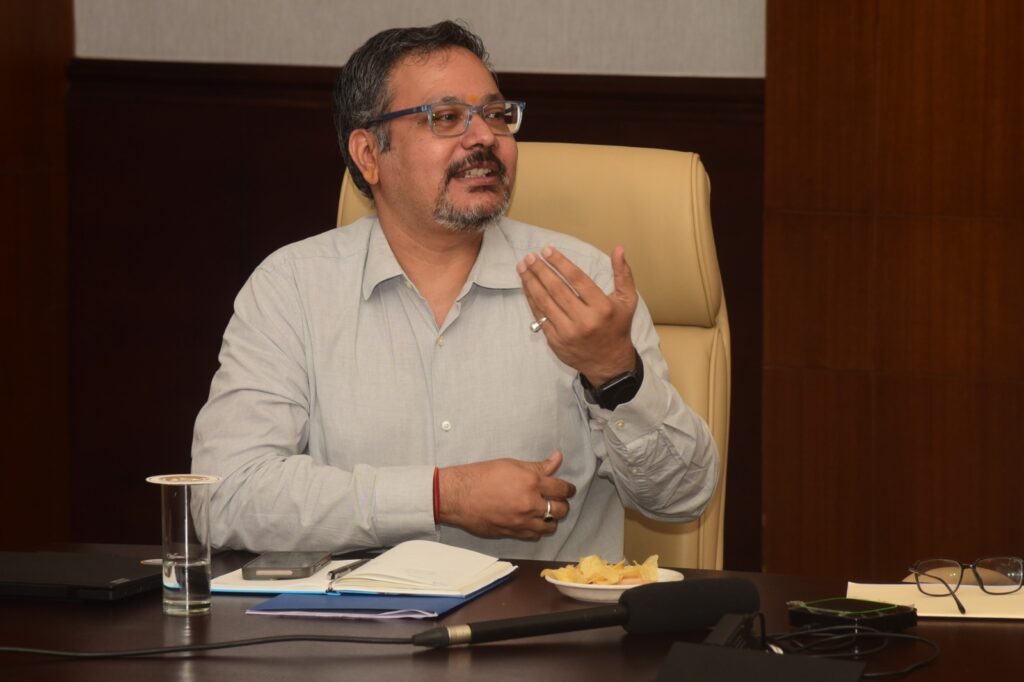
the Heat Action Plans formulated at state and district levels, and the role of the media in the effective implementation of these plans. He stated that climate change is not merely an environmental challenge but also a critical public health issue, with its impact manifesting in various ways across different sections of society.
He emphasized that the media serves as a vital medium for disseminating accurate and timely information to the public regarding climate change and its associated health risks. Public awareness messages concerning heatwaves, air pollution, and waterborne or vector-borne diseases can play a crucial role in protecting communities from these risks. He noted that positive and solution-oriented reporting is just as essential as highlighting the problems themselves.
Referring to the ‘National Programme on Climate Change and Human Health,’ Dr. Joshi explained that the initiative was developed to mitigate the impact of climate change on human health. The program rests on five key pillars: extreme heat, air pollution, vector-borne diseases, extreme weather events, and green and climate-resilient systems. He pointed out that the effects of climate change are not limited to rising temperatures but also extend to air quality, the spread of diseases like Dengue and Chikungunya, mental health, pregnancy-related issues, and other health challenges.
Addressing a media workshop held at the Constitution Club in Jaipur on the occasion of World Environment Day, Dr. Anurag Joshi, Health Officer at UNICEF, discussed in detail the health impacts of climate change